WHEN DID YOU KNOW YOU WERE AN ARTIST?
My journey into the world of art was anything but straightforward or linear. Three pivotal moments, over a 28-year journey, eventually led me to call myself an artist. Having lost everything in the Iranian Revolution, my parents were determined to secure their children’s future independence. That meant pursuing a stellar education and a secure career. The only segway I allowed myself during my university years was an art history class which I greatly enjoyed. One day, an old slide projector displayed grainy, low-resolution images of paintings by an artist I had never heard of: Jackson Pollock.
Something woke up within me that day. I felt an almost physical urge to paint, something I hadn’t done since early childhood. I went straight to the campus shop, bought some art supplies, and started painting. I then put it all aside to follow the path that had been traced for me, returning to painting only years later whenever I could carve out time from an otherwise demanding corporate schedule. At first, painting felt hedonistic, a deep craving I couldn’t explain to myself and kept hidden from others. As I ran out of space, I began hanging a few at home but because I didn’t sign the fronts and never spoke about painting, my secret remained safe.
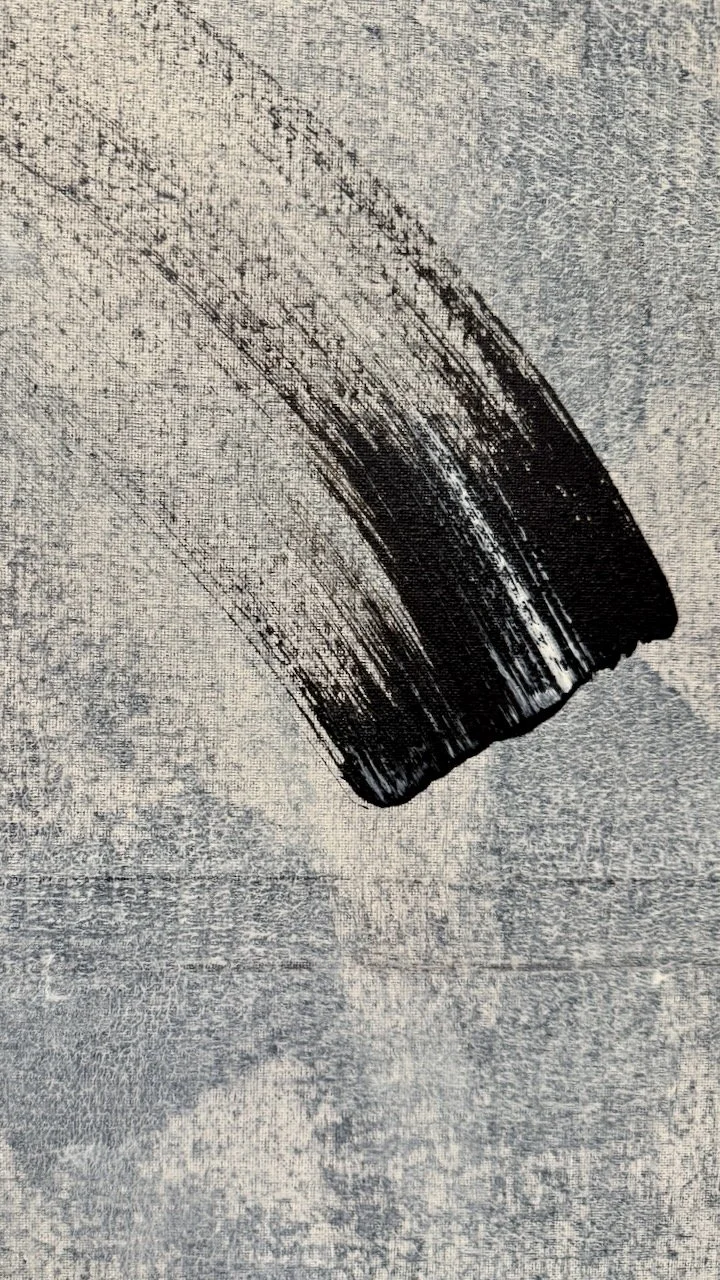
Years later, while living in New York, I met an art dealer who was clever and curious enough to break my silence. She encouraged me to donate a particular painting she liked to the Asia Society for a major charity event. Watching a Christie’s auctioneer I had never met describe my work so eloquently, then see people actually bid for it, was the second pivotal moment in my journey. For the first time, my work was being seen and judged purely on its own merit. It was profoundly liberating. From that point on, I occasionally whispered that I was “a painter.” I said it with more confidence only some years later when I was finally able to pursue my passion full-time.
The third trigger was photography. As I was preparing to exhibit my first series, I found myself confronted with how to update my bio which described me as “a painter”. Only then, and for purely pragmatic reasons, did I finally dare to use the word “artist”, a term I held in reverence like a title bestowed by others rather than something one could claim for oneself.
Looking back, I would say I was an artist long before I gave myself permission to become one.
HOW WOULD YOU DESCRIBE YOUR WORK? IS THERE A VISUAL OR CONCEPTUAL THREAD?
At first glance, my paintings appear purely abstract, layered and gestural. Yet beneath the surface is a deeply autobiographical narrative. They are informed by exile, living across continents, my studies in international relations and a lifetime of reading and thinking about revolutions, wars, authoritarianism and conflicts between people.
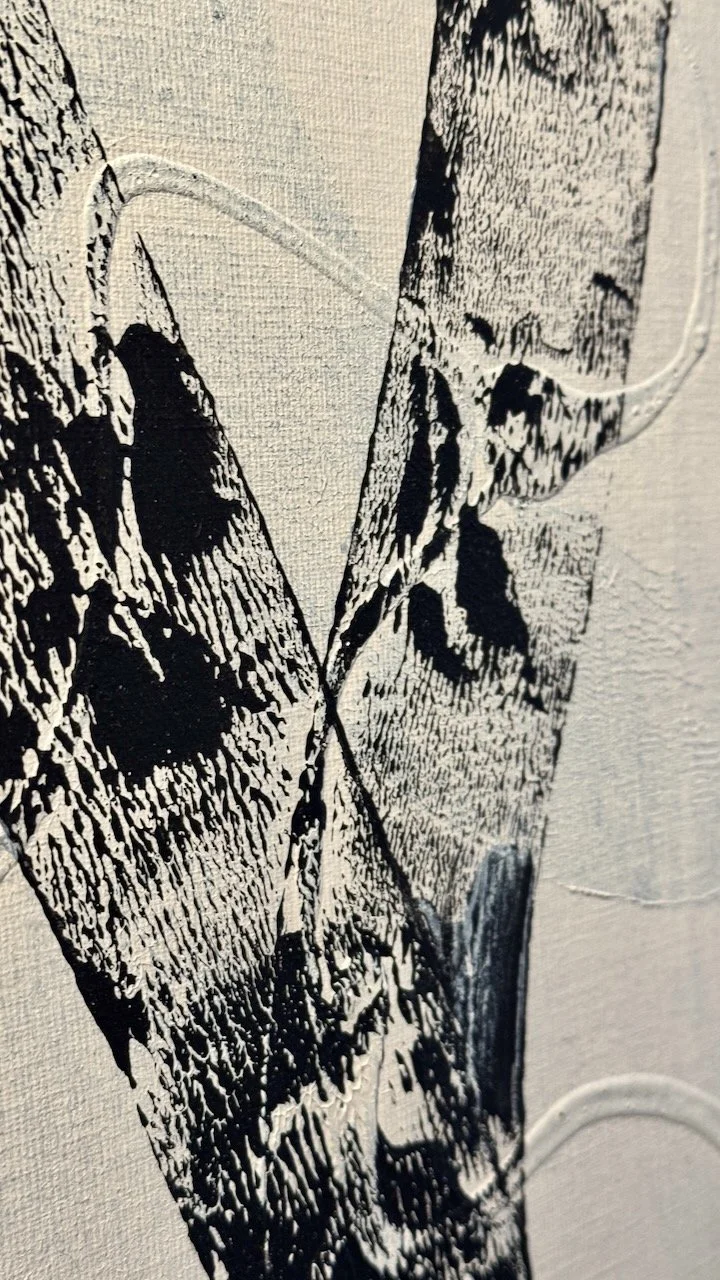
The different painting series, together with the texts I write to accompany them, give voice to some of the questions and concerns I have carried over the years. They are less about providing answers than about inviting the viewer to pause, look differently, and perhaps reconsider how we see and understand the world, and one another.
Photography has taken me in a different visual and seemingly figurative direction, with nature often becoming my subject. I deliberately avoid depicting the human figure directly, yet the human dimension is always central. I am interested in what happens when we look more closely and attentively at the world around us. In that sense, the underlying thread between the two practices is perhaps the same: a call to look deeper, with greater care and curiosity, with a view to ultimately approach the world and others with more empathy.
HOW MUCH OF A PRE-DEFINED IDEA DO YOU HAVE OF THE FINISHED WORK BEFORE YOU START?
My name, Azadeh, means “free-spirited” in Persian, and painting is probably where I allow myself the greatest freedom to experiment, explore and express what’s within me.
I’m more of a jazz musician than a classical one! I often have a preset palette of colours in mind and the conceptual framework of an existing series, yet within those boundaries I allow myself a great deal of freedom to improvise and create new compositions. Each painting becomes a variation on a theme while remaining recognisable within a series.
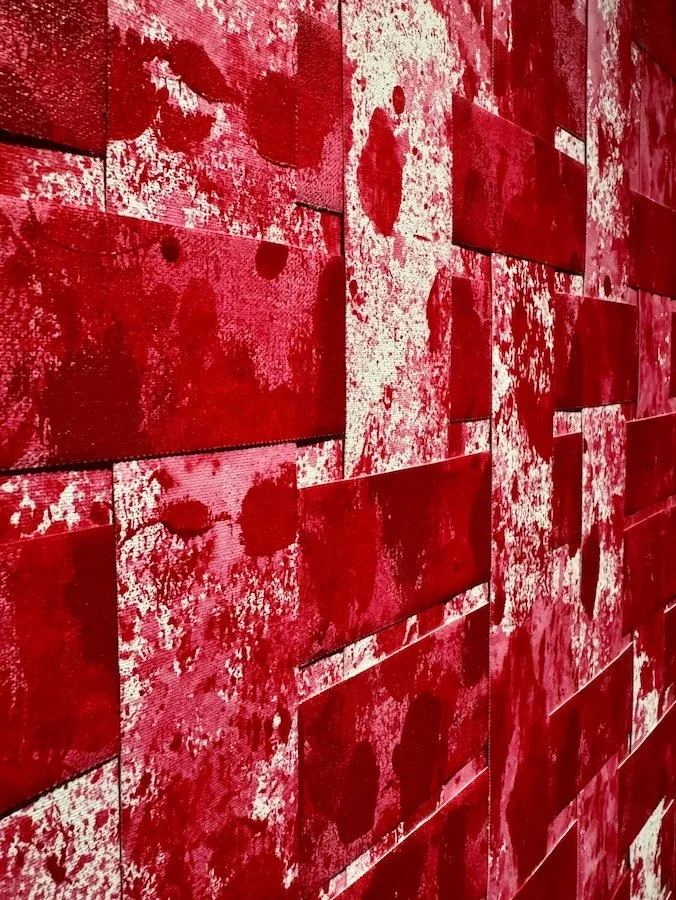
I would feel too constrained if I sketched a finished work on paper and then simply executed it on canvas. Occasionally, I’ll begin a painting, photograph it at an early stage, and only then sketch and experiment different next steps on my computer. But more often than not, when I return to the canvas, looking at it anew, I feel the need to react more spontaneously to it and not be restrained by what I’d spent time sketching earlier.
At times, I set almost no boundaries at all, other than perhaps a colour palette. Those paintings often become one-off “untitled” works, the starting point for a new series, or something I eventually return to and rework entirely. I allow myself the freedom and openness to see them as promising foundations to further discoveries.
HOW LONG DOES IT USUALLY TAKE YOU TO PRODUCE A NEW PAINTING AND HOW DO YOU KNOW WHEN IT’S FINISHED?
Painting is a bit like alchemy: a mysterious process with an element of chance and fortuity that I fully embrace. I find painting both deeply stimulating and meditative. I’m hopeless at meditation per se, but painting is the one thing that takes me into a zone where I completely lose my sense of time. Some works have felt just right within a matter of days. More often, particularly because my process involves building up many delicate layers, they take several weeks. And then there are works that evolve over many years.
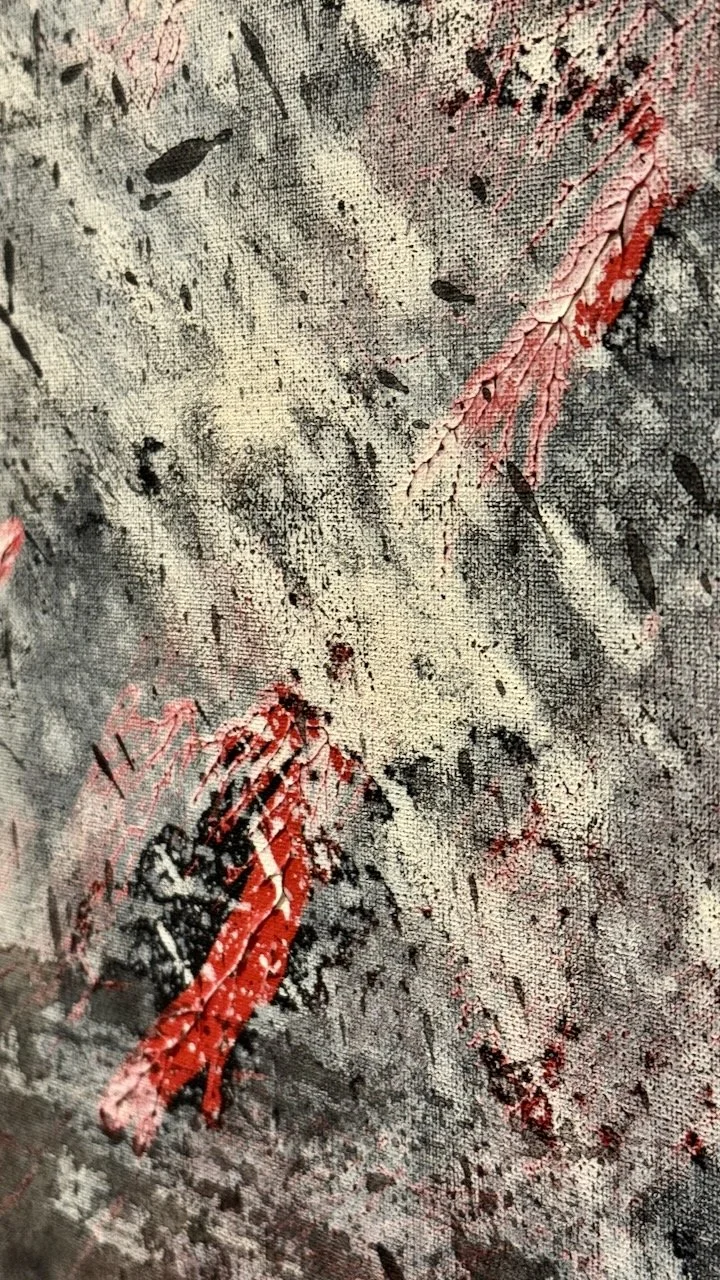
Sometimes I can struggle with a particular section, and the more I work on it, the further I seem to get from what I had hoped for. With experience, I’ve learned that the best thing I can do in those moments is to step back, pause the creative process, and let time do its magic. It may be months, or even years, before I return to the work. In fact, some paintings have gone through several such cycles. Those can end up being the most rewarding pieces. The obstacles, hard work and time it took gives them a depth and complexity that is unique and impossible to replicate. I see parallels in that to how a person who’s overcome difficulties in life can be noticeably wiser, more layered and interesting than someone who hasn’t faced the same challenges.
So, to answer the question, a painting can take me anywhere from a few days to many years. As for knowing when it is finished, that ultimately comes down to instinct, but it is an instinct shaped and sharpened by years of practice.